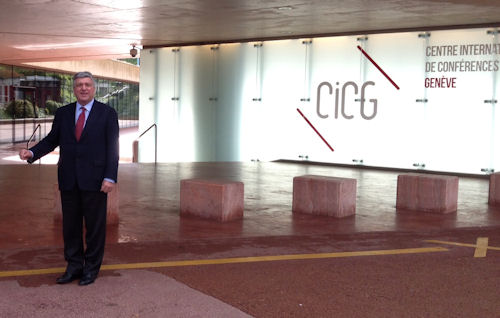
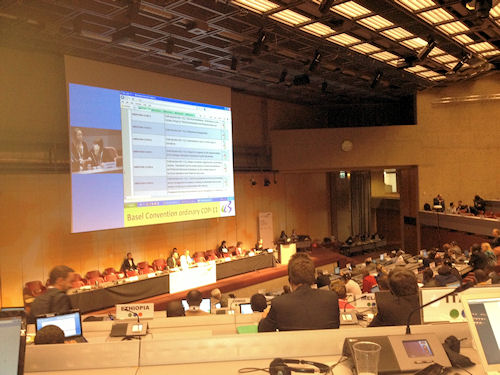
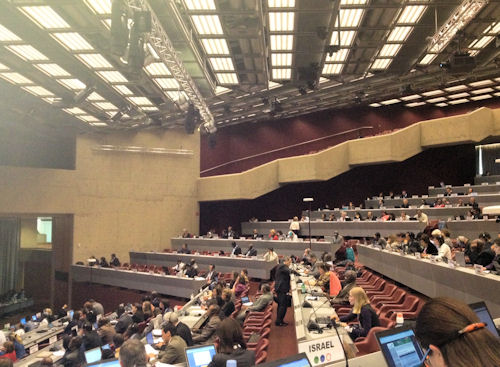
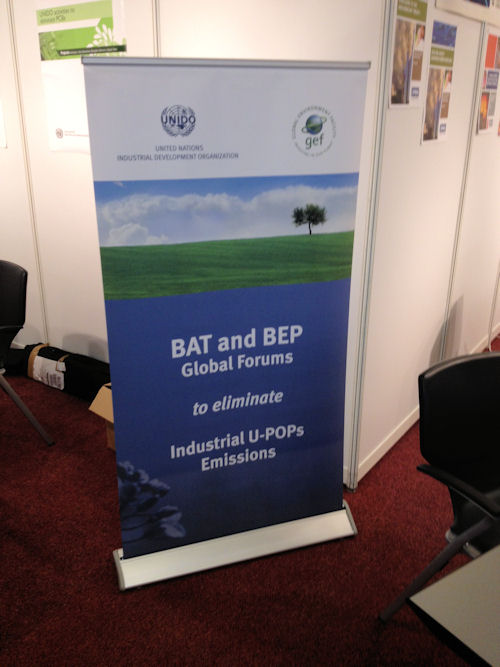
From 28th April through 10th May, in Geneva, the event COPs 13, “Conference of the Parties”took place seeing the joint participation of the Convention of Basle 1, the Convention of Rotterdam 2 and the Convention of Stockholm 3. The objective of the event was to feed a synergic effort among the three organisms for a coherent political direction and to facilitate a more effective actions both on the technical- specialistic aspects and budgetary questions. One of the key topics of the event has been, without doubts, eWaste, i.e. the topic relative to electric and electronic wastes, which determine a devastating social and economic impact, especially for the Developing Countries. It is well known, in fact, that these Countries are often used as real rubbish dumps by the industrialised Counties and how the very dangerous recovery operations of noble metals are carried out by women and children.
Thus, the Conference highlighted the attention on this topic, setting, for example, 2028 as a deadline for the disposal and/or decontamination of PCBs at worldwide level, always complying with BAT/BEP. Sea Marconi, since 2000 – with the European Projects Haloclean Conversion (n° G1RD-1999-00082) based upon the European patent (EP 1354172 A1, priority 12.19.2000) and Haloclean Application (n° G1RD-2002-03014) – started the study and then developed a technology for the decontamination and the conversion of electric and electronic waste into energy. Today, the project, designated as BAT by the Ministerial Decree 29/01/2007 has enormously evolved using the same technology also for the conversion of non-food biomasses.
Coming back to COPs 13, the impression by Vander Tumiatti, at the conference thanks to his 45 years long experience in the Risk assessment of PCBs, has been the need for an harmonisation of the norms “by the three Conventions” and those that are typically the prerogatives of International Standardisation Organisms (i.e. IEC, CENELEC, etc). On this subject, for example, within IEC (International Electrotechnical Commission) there is indeed a technical committee (TC 111 Environmental standardization for electrical and electronic products and systems) dedicated to the preparation of a regulation relative to the Life Cycle management (LCM) and the subsequent environmental implications of electric and electronic products, with a particular attention toward their end-of-life. This is so because such products often contain dangerous materials such as flame retardants (PBBs, Polybrominated Biphenyls) or other chlorinated substances that, in case of uncontrolled combustions, can produce dioxin. Thus, within the PEN, talking just about PCBs only, it would be advisable in the same manner a harmonisation including the other international norms, for example CENELEC PR 50503 of 2010.
We are taking here the opportunity, even if it shall be deepened in the next news, that IARC(International Agency for Research on Cancer) has recently modified the classification of PCBs from probable carcinogenic for human beings into carcinogenic for human beings.
1 “Basel Convention” on the Control of Transboundary Movements of Hazardous Wastes and Their Disposal
2 “Rotterdam Convention” on the Prior Informed Consent Procedure for Certain Hazardous Chemicals and pesticides in International Trade
3 “Stockholm Convention” on Persistent Organic Pollutants