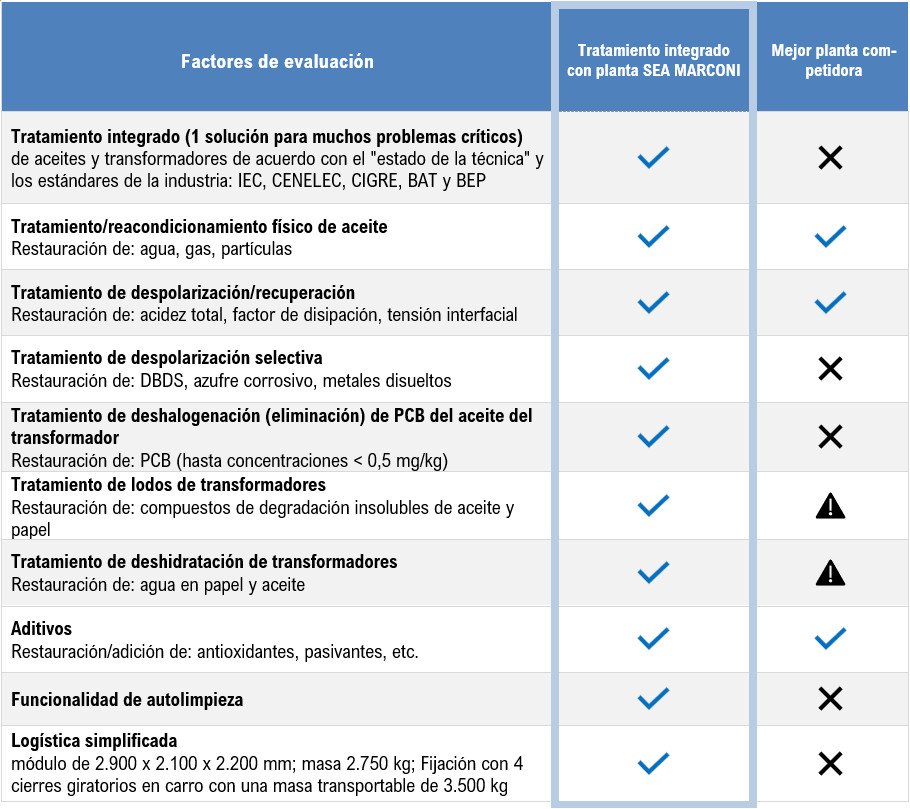
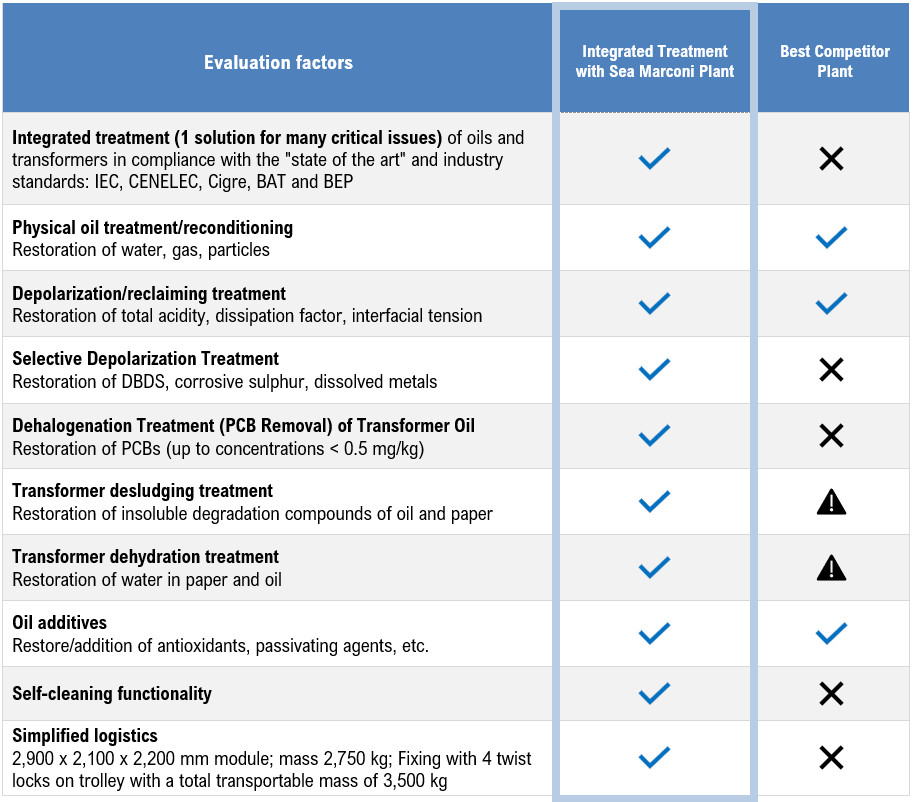
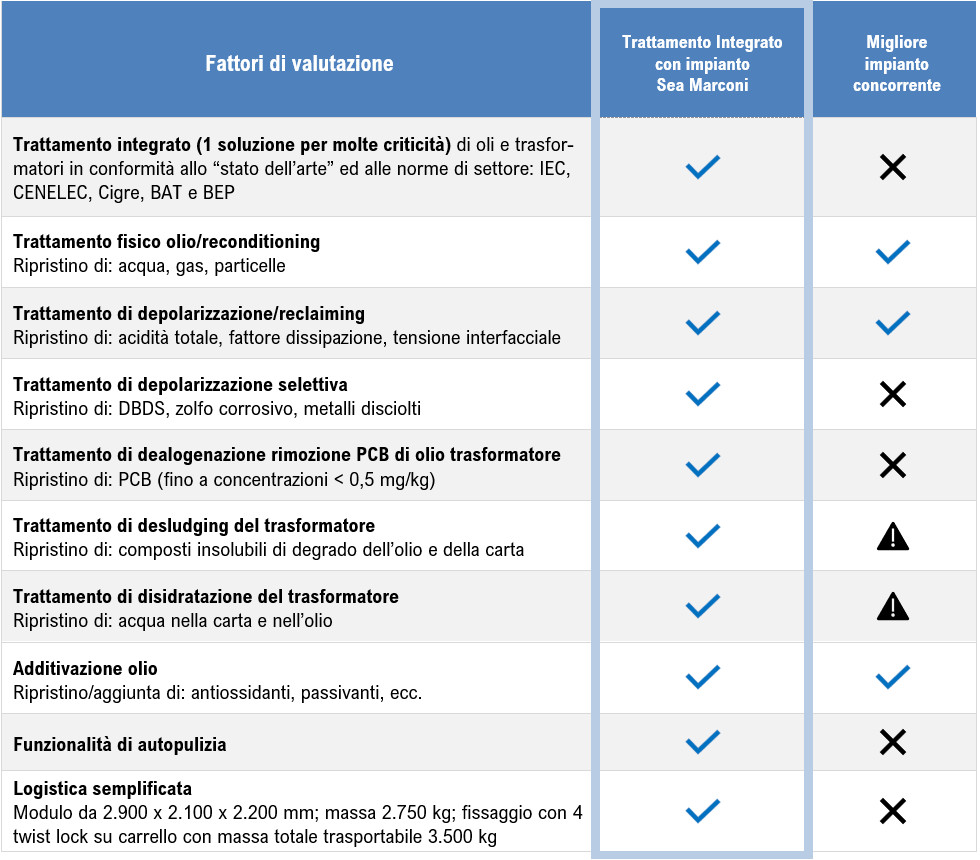
Sea Marconi offers a comprehensive service for the replacement of oil in electrical transformers, a process also known as retrofilling. This service is aimed at ensuring the highest efficiency and safety of transformers, contributing to environmental protection, especially when choosing a natural ester fluid to replace mineral oil.
Mineral oil, historically used as an insulating liquid in transformers, can degrade over time, compromising the performance of the equipment and increasing the risk of service interruptions, environmental damage, and fires. Replacing oil with natural or synthetic esters is an effective solution to mitigate these risks and ensure the long-term proper functioning of the transformer.

Mineral oils to Natural esters: a Sustainable choice!
The benefits of natural esters
as natural esters are almost completely biodegradable
thanks to a higher fire point and flash point
as the degradation of the paper is slower and can operate at higher temperatures

Why choose the Sea Marconi methodology
Sea Marconi stands out for the following advantages in the oil replacement process in transformers:

A. Minimizing residual mineral oil.
Mineral oil is miscible with natural ester and has a negative impact on the fire point and flash point of the ester. Experimental tests show that a mineral oil content above 7.5% can reduce the fire point of esters below 300°C (class K limit).
Sea Marconi’s filling and treatment systems, thanks to their performance, are able to minimize the percentage of residual mineral oil (< 2%) and still guarantee a fire point comparable to that of new oil and never below 300°C.

B. Reducing the oxidation of natural ester.
It is good practice to avoid contact of natural ester with air. To this end, Sea Marconi has developed a system, ideal for distribution transformers, that seals the conservator from the atmosphere (where silica gel salts are usually present) but connects it to an external “lung” filled with nitrogen.
The “lung” acts as an additional expansion vessel to the conservator (medium-sized transformers) allowing the transformer to “breathe” due to temperature variations: if the oil level in the conservator rises, the external lung expands, if the oil level in the conservator drops, the external lung contracts.
In this way, the natural ester fluid is never in contact with the atmosphere and is therefore protected from oxidation.
Procedure for replacing mineral oil with natural ester
at this stage, analyses and electrical tests are carried out to “capture” the initial state of the oil and equipment
lifting the active part and replacing the gaskets
Then this fluid is circulated with a Sea Marconi system at t >50°C for 8 hours
Then this fluid is heated, degassed, and dehydrated with a Sea Marconi system at t >60°C for 48 hours


Origins
History
- 1887 Mineral oil, first use (Westinghouse) as an insulating liquid in transformers and other electrical applications
- 1980 Synthetic ester, first applications
- 2000 Natural ester, first uses in distribution transformers
- 2010 Natural ester, first uses in large power transformers