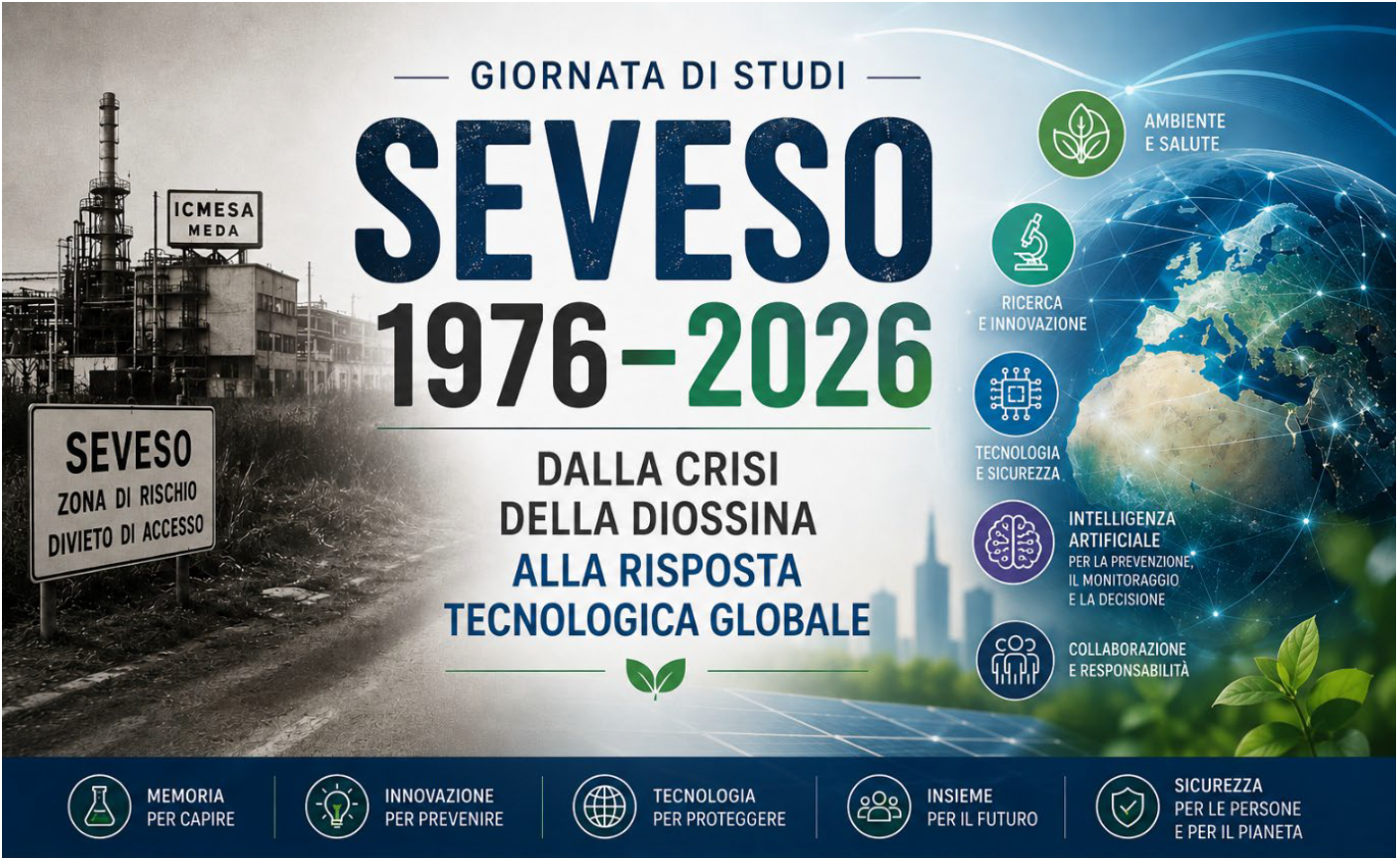
Fifty years ago, on 10 July 1976, the explosion of reactor A101 at the ICMESA plant in Meda (Milan) released 2,3,7,8-TCDD, known as “Seveso dioxin”, into the environment. It was the world’s most severe case of contamination by this substance and marked a definitive turning point in the global perception of environmental risk, contributing to the first European Directives on PCBs (polychlorinated biphenyls) issued that same year — a substance now classified among the POPs (Persistent Organic Pollutants) under the 2001 Stockholm Convention.
Sea Marconi’s role in the technological response
In December 1982, Senator Luigi Noè, head of the Special Office for Seveso of the Lombardy Region, invited Sea Marconi to propose a solution for detoxifying the dioxin. The company, founded in Collegno in 1968 by Vander Tumiatti, took up the challenge: in 1983, working with the European Joint Research Centre in Ispra (Prof. Sergio Facchetti) and the University of Turin (Prof. Pietro Tundo), Sea Marconi became the first in the world to experimentally validate, both in the laboratory and in the field, the dehalogenation and detoxification of Seveso dioxin through CDP Process®, patented the year before.
From dioxin to PCBs in transformers
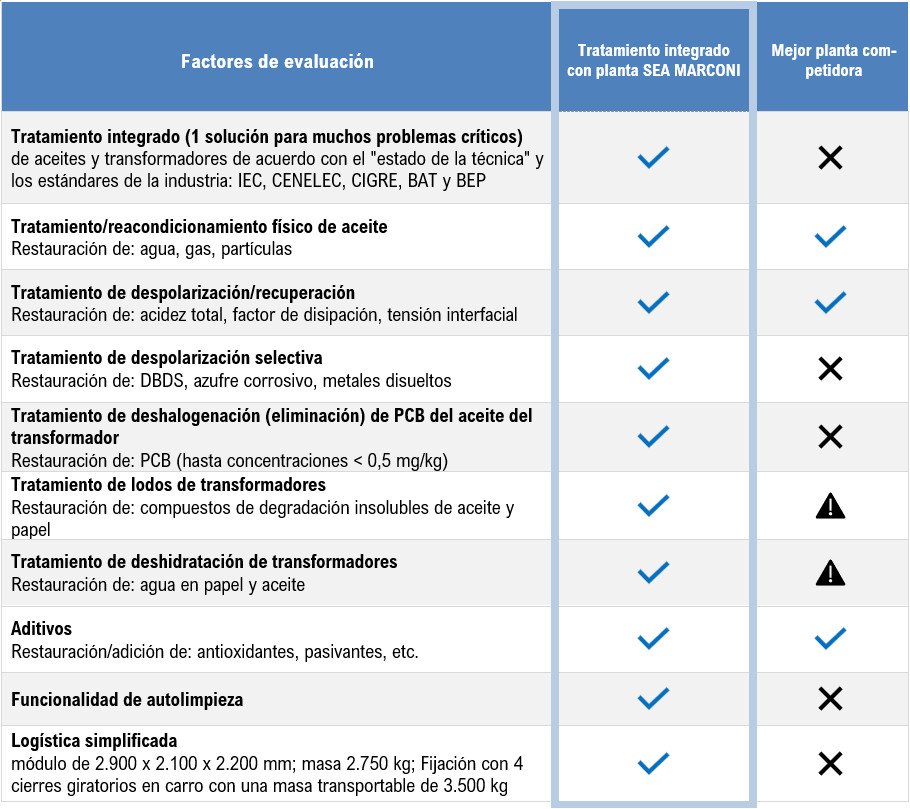
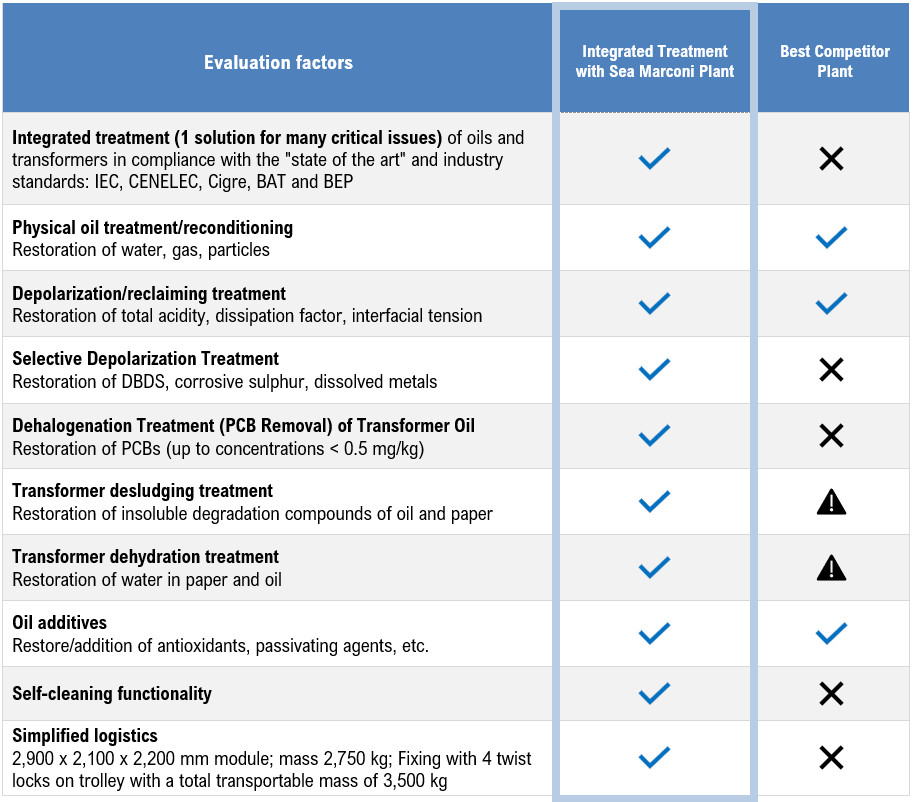
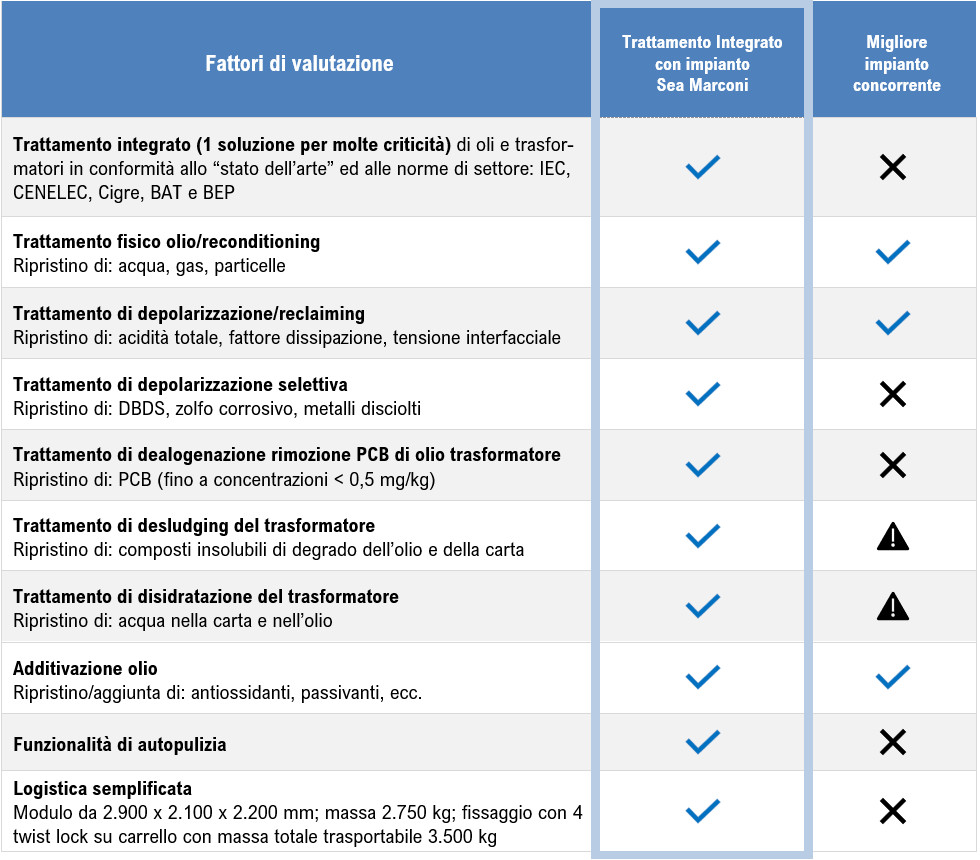
Seveso dioxin and PCBs belong to the same family of pollutants: both are POPs under the Stockholm Convention, sharing toxicity and environmental persistence. CDP Process®, validated on the most extreme case ever recorded, is the same technology Sea Marconi uses today to treat PCBs in the insulating fluids of electrical transformers, in service even under load, with no need to empty the equipment. Classified by Italy’s Ministry of Environment as Best Available Technique in 2007, CDP Process® is now recognized as BAT/BEP in UNIDO-GEF projects supporting the objectives of the Stockholm Convention, and applied in over 50 countries.
The study day
Fifty years after that event, Sea Marconi and the University of Turin are jointly promoting an interdisciplinary study day to revisit this history and examine, with contributions from experts in chemistry, law, linguistics and artificial intelligence, the path that led from the dioxin crisis to today’s global technological responses.
? Thursday 9 July 2026, 8:30 AM
? Aula Magna of the Rectorate, University of Turin, via Verdi 8
Speakers include Vander Tumiatti and Silvia Cerlesi, presenting on CHEM & AI and on CDP Process applied to Seveso dioxin.
How to attend
The event is open for in-person attendance. A webinar broadcast (up to 1,000 attendees, view-only) is also available at the following link:
https://unito.webex.com/unito/j.php?MTID=mb16ff38098f4a38c5adba04177d79a76