The actions recommended by IEC 60422 Ed.4-2013. In the presence of “corrosive sulfur” are perform a risk assessment and then alternatively choose to:
A. reduce the corrosiveness of the oil by adding a copper passivator or
The case of the Brazilian electricity grid in August 2005, reported in the CIGRE 378:2009 brochure, shows that 50% of passivated reactors suffered a failure – the first 33 days after passivation and the last 590 days after passivation.
B. remove the source of corrosiveness by changing the oil or
C. remove the source of corrosiveness by removing the corrosive compounds through appropriate oil treatments
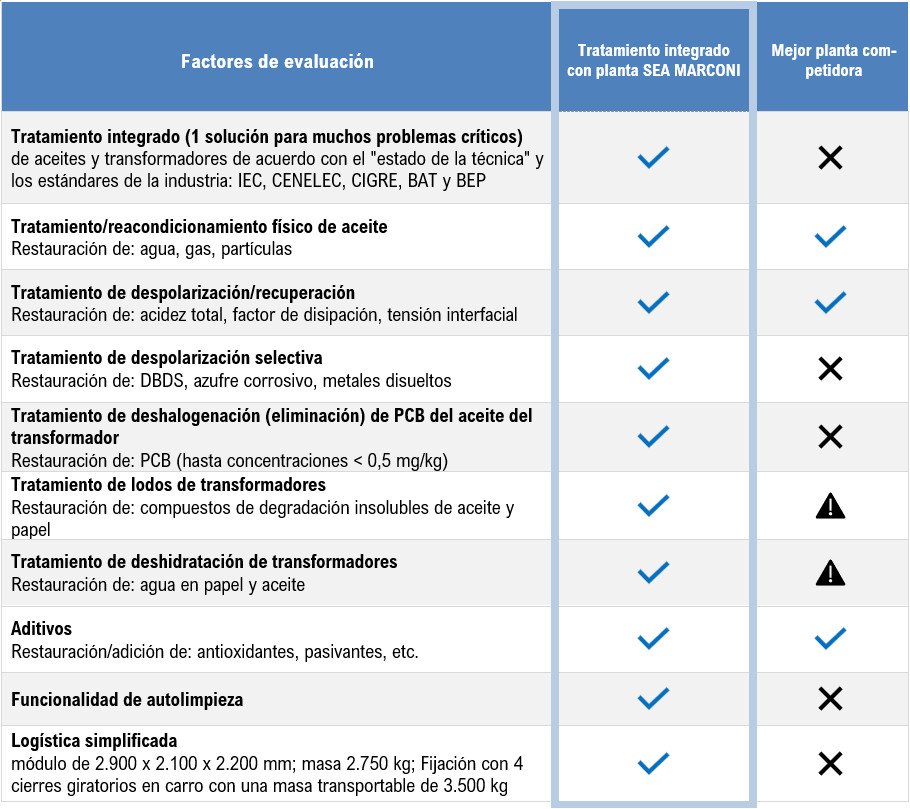
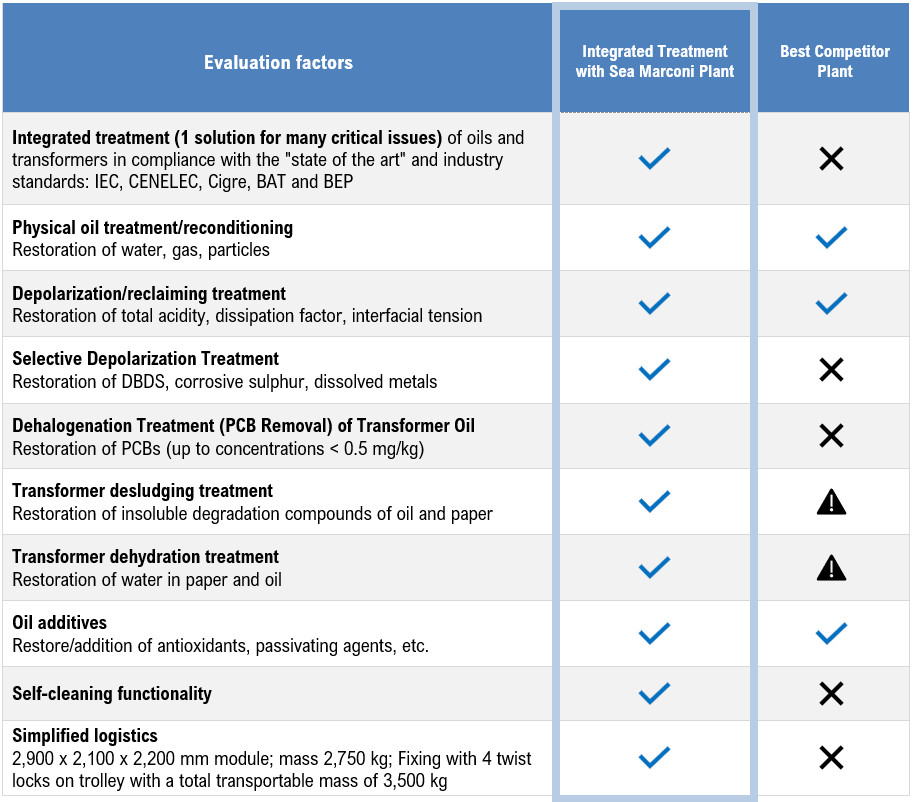
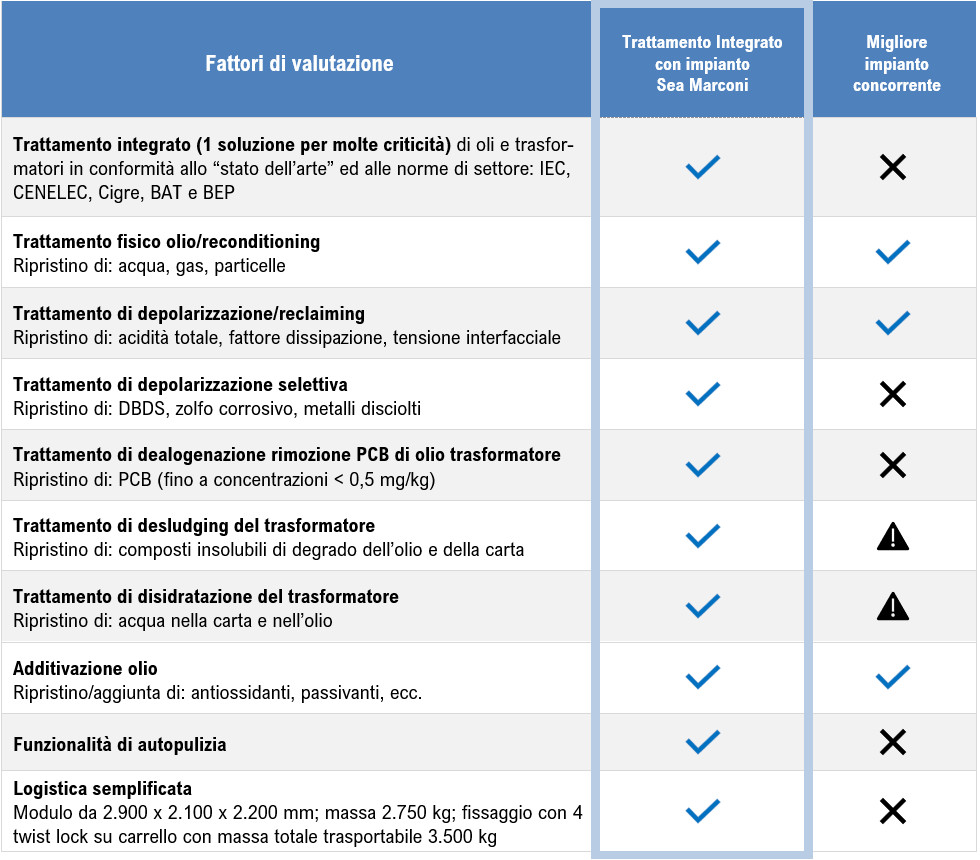
 The countermeasure devised and employed by Sea Marconi is included in this category. This is a selective DBDS depolarisation process implemented on site while the transformer remains in service (and under load), with no need to empty it. The operation is carried out using a Decontamination Modular Unit (DMU) specifically created by Sea Marconi. The transformer is connected to the DMU by flexible tubes; the oil contaminated with DBDS is sucked from the lower part of the transformer and ends up in the DMU, which heats it, filters it, degasses it, dehumidifies it and decontaminates it before pumping it back into the upper part of the transformer.This creates a closed loop and every time the oil is circulated the corrosive sulfur compounds are removed (< 10 mg/kg expressed as DBDS equivalent)