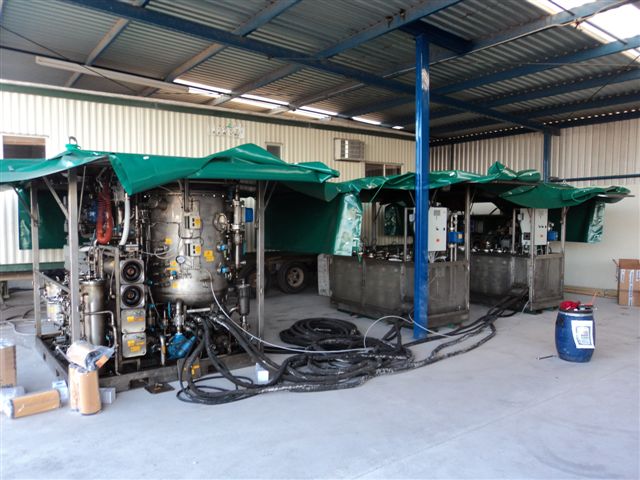

On 2nd and 3rd January 2013, an agreement for the supply of the Sea Marconi’s solution finalised toward the dehalogenation of oils and transformers contaminated by PCB in Mexico has been signed.
Sea Marconi has entered the cooperation agreement with a prestigious local partner: System of Energy s.a., which shall carry out, after e period of education and training, the field activities. The dehalogenation of oils and transformers with PCBs shall be performed using the method CDP Process® by Sea Marconi, which uses:
- special patented reagents,
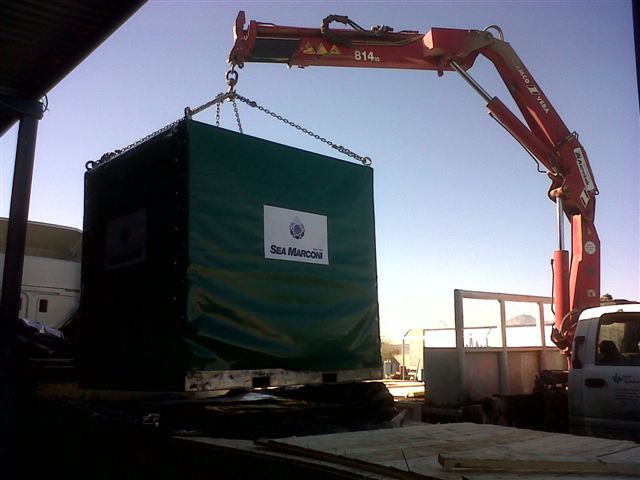
- eatment plants entirely made internally (DMU – Decontamination Mobile Unit),
- and a safe and sustainable process providing the complete decontamination of the oil and the electrical equipment containing it.
The dehalogenation treatment CDP Process® by Sea Marconi not only allows the “PCBs free” reclassificationof the transformer and the oil, but returns the oil to optimised conditions thanks to the various phases of the treatment itself: heating, filtration, chemical dehalogenation, degassing, dehumidification. Not only, but also the transformer benefits from the treatment, since the continuous circulation of the oil between the DMU and the transformers, generates a flow of oil that progressively provides the removal of the impurities accumulated at the bottom of the tank and on the insulating papers.
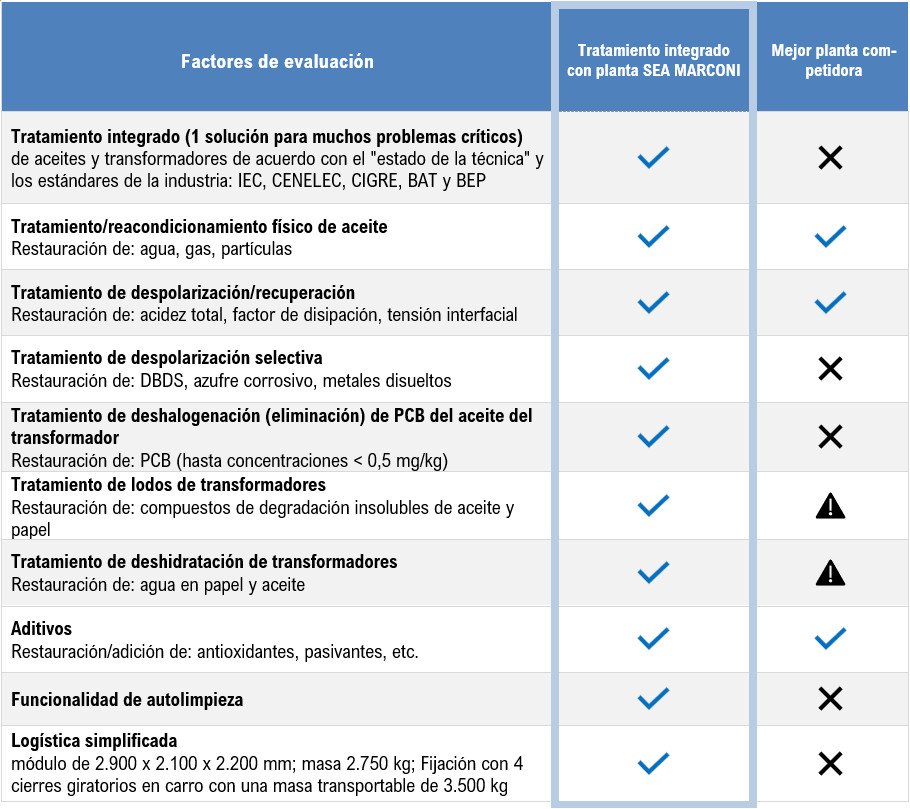
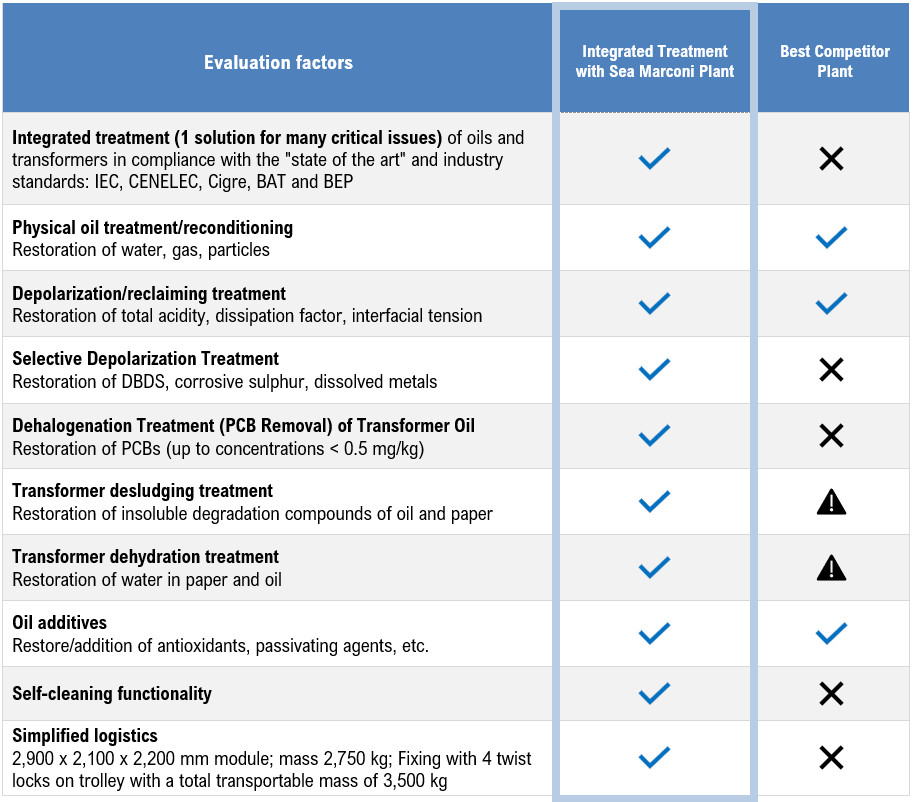
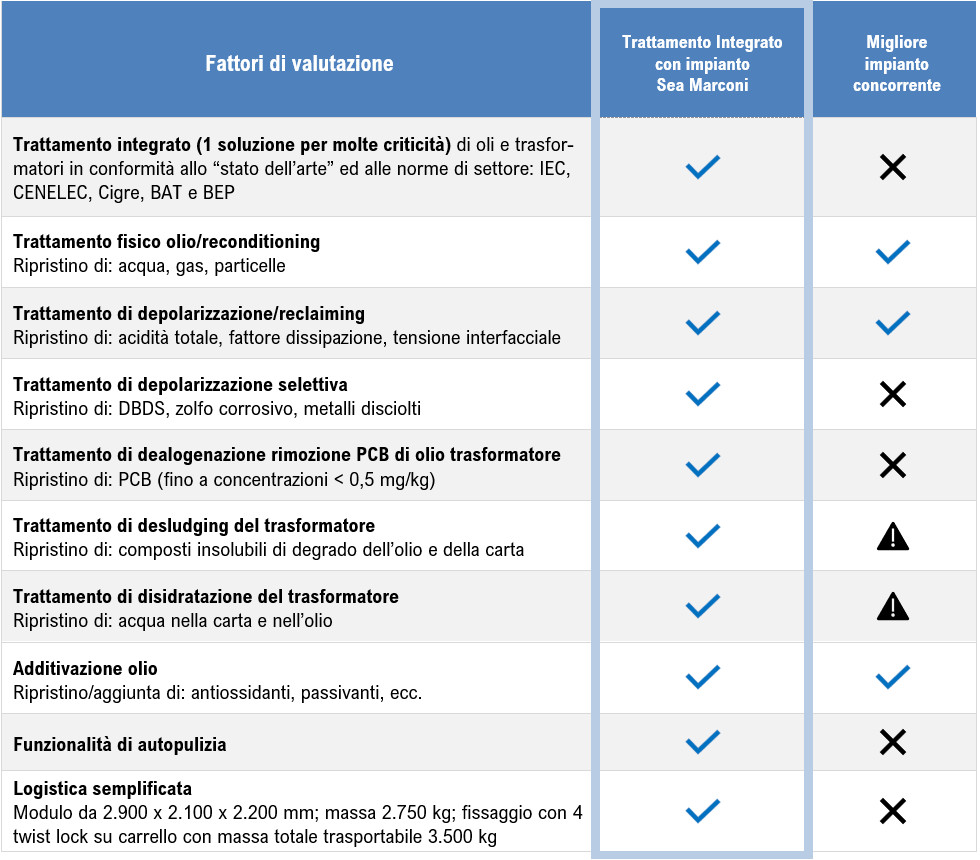
Sea Marconi has beaten the competition at international level, since it was able to offer to the Mexican partner a solution:
- prompt;
- fully complying with the Convention of Stockholm and the technical norms of the sector CENELEC CLC/TR 50503, IEC 60422 Ed. 4 2013,
- considered as BAT/BEP (Best Available Technique/ Best Environmental Practice); please refer to the CIGRE brochure no. 413 (April2010).
Sea Marconi confirms its international leadership by supporting the users of fleets of electrical equipment with insulating oils through the entire life cycle (LCM – Life Cycle Management). Sea Marconi’s approach always keeps faith with the respect for the environment by proposing solutions providing the conservation of resources/equipment and oils) in operation or increasing their value during the end-of-life phase. In doing this, it is possible to prevent the disposal/incineration of enormous amounts of contaminated fluids and equipment and the subsequent emissions of CO2 into the atmosphere.